The LINGUARISE-DC project addresses the pressing need for advanced natural language processing in Europe’s defence sector. International missions face challenges such as linguistic diversity, limited training time, dependence on human interpreters, and security risks. LINGUARISE-DC seeks to transform language capabilities with an advanced human language technology (HLT) platform, designed to enhance European Union-led coalition missions and special operations.
Current reliance on human translators limits scalability and efficiency. By integrating cutting-edge technologies, LINGUARISE-DC aims to empower military personnel and decision-makers to communicate, analyse, and understand foreign languages seamlessly.

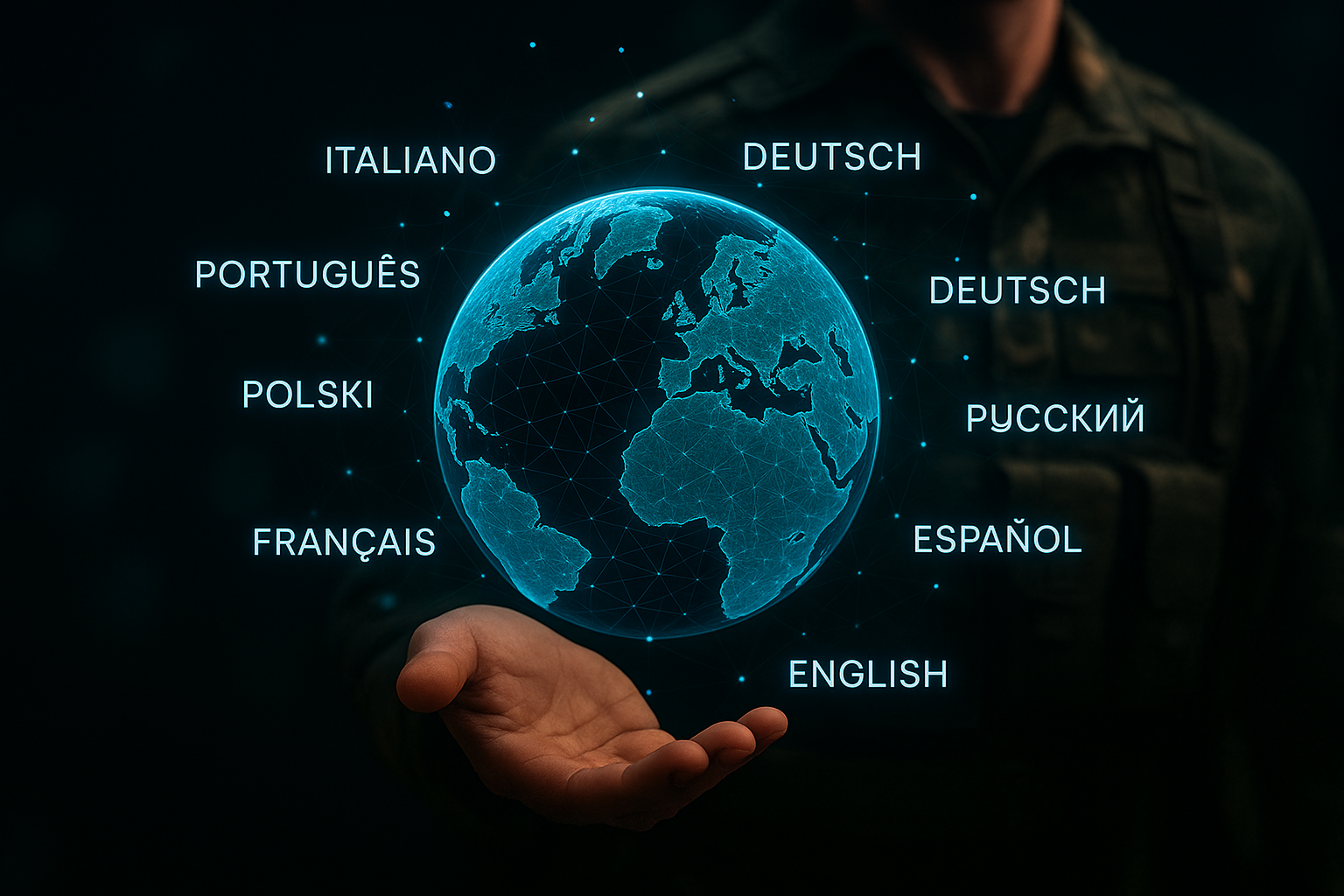
The project’s primary goal is to develop a modular, intelligent platform that improves coordination, intelligence gathering, and communication in ad-hoc coalitions. With a focus on enhancing military communication capabilities, it fills a critical gap in applying HLT to meet the unique linguistic and informational demands of the European defence landscape.




The LINGUARISE-DE project is funded by European Defence Fund. More about this fund:
defence-industry-space.ec.europa.eu
The project is funded under the EDF-2023-LS-RA-CHALLENGE-DIGIT-HLTP call — Agile and robust human language technologies for defence – Participation to a technological challenge.
A technological challenge constitutes a structured approach to the organisation of R&D activities, wherein multiple research and development teams pursue a defined technological objective within a standardised testing environment established expressly for this purpose.
Such challenges are particularly well-suited to the investigation of complex systems, notably those involving artificial intelligence and machine learning, as they facilitate the objective and comparable assessment of system performance.
In the framework of a technological challenge, the organiser, in collaboration with the participating R&D teams, formulates common experimental protocols and subsequently provides the testing environment, enabling teams to evaluate their systems in accordance with these established protocols.
More about technological challenge:
The organising consortium is supported under the project ARCHER. Three participating teams are supported under EDF projects: AtLaS, LINGUARISE-DC, NEMO.