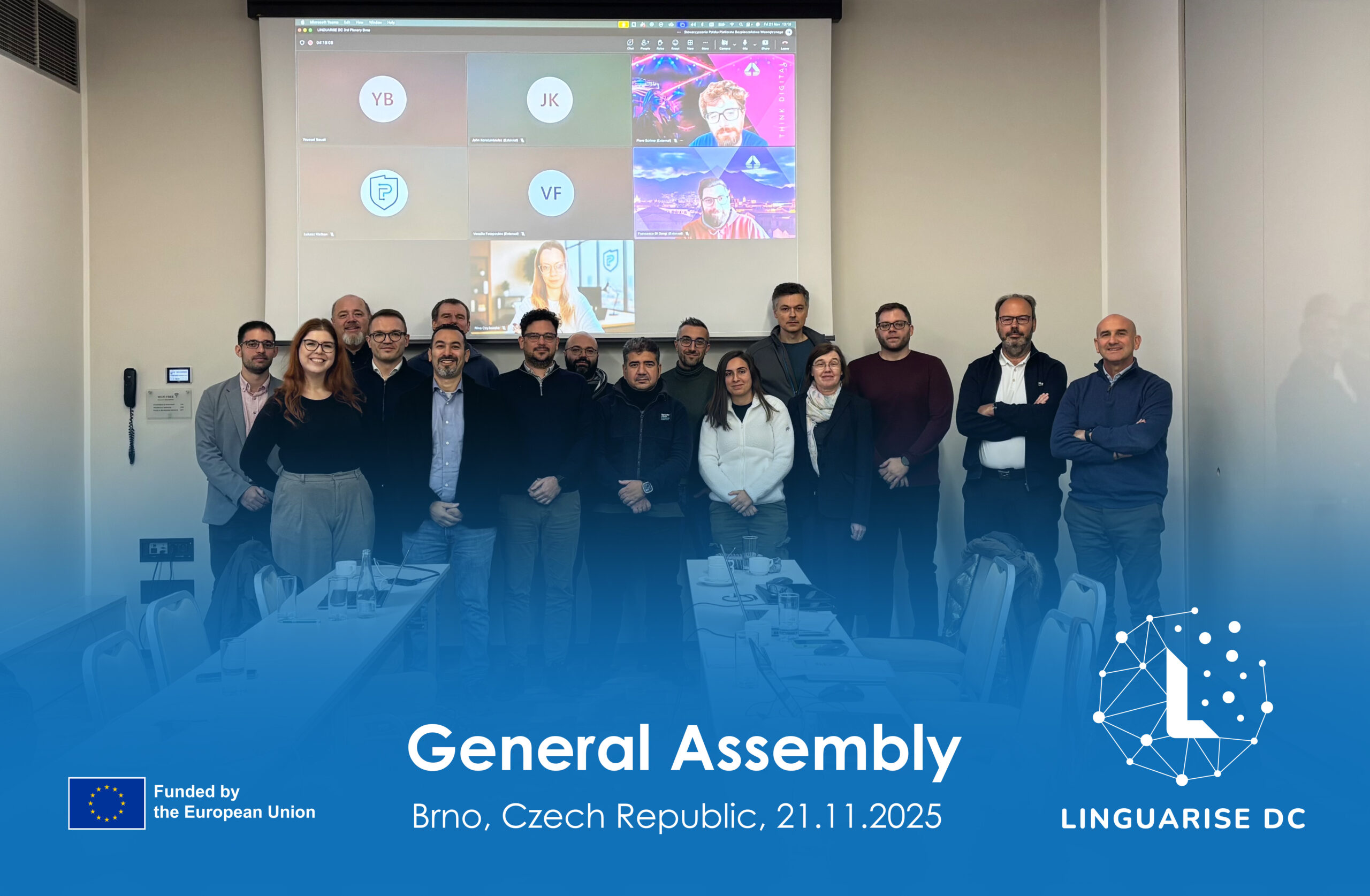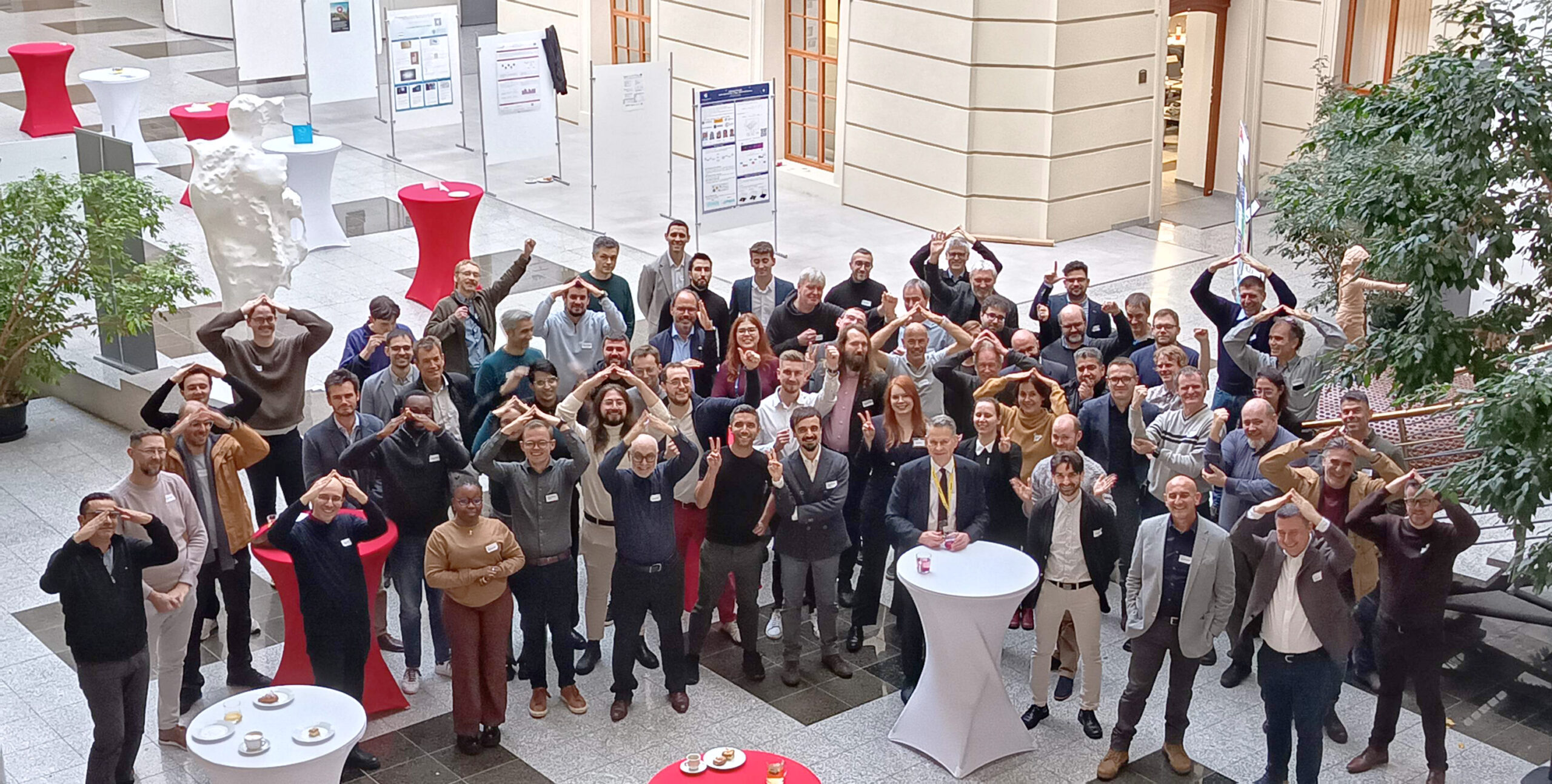
On 19–20 November 2025, partners from the LINGUARISE-DC consortium took part in the first annual evaluation workshop held in Brno, Czech Republic. The event was hosted by Brno University of Technology and organised together with the ARCHER project, which is responsible for running the technological challenge on human language technologies (HLT) for defence.
The Brno workshop took place in the context of the European Defence Fund technological challenge “Agile and robust human language technologies for defence” (DIGIT-HLTP). Under this scheme, three projects – AtLaS, LINGUARISE-DC and NEMO – are developing and testing advanced human language technology demonstrators within a common evaluation framework designed and run by the ARCHER project.
Although each consortium has its own partnership structure and technical approach, all three are working towards the same objective: delivering robust, multilingual language capabilities that can operate reliably in realistic defence conditions. ARCHER defines the shared tasks, prepares datasets and runs the evaluation campaigns, while AtLaS, LINGUARISE-DC and NEMO focus on building and iteratively improving their systems based on the results.
This joint set-up encourages both healthy competition and structured knowledge exchange, helping to accelerate progress and to ensure that future defence-oriented language technologies are benchmarked in a transparent, comparable way.
The Brno workshop was designed as a joint check-point for all actors engaged in the challenge:
Sessions were devoted to reflecting on task achievements so far, discussing where systems struggled, and identifying improvements that will make future evaluations more realistic and more useful for defence end-users.
For LINGUARISE-DC, the workshop was an important milestone in the first year of the project’s participation in the DIGIT-HLTP challenge:
Over the coming years, ARCHER will continue to organise a series of evaluation campaigns within the technological challenge framework, with all three EDF consortia expected to submit improved systems and to test new capabilities as their platforms evolve.
The Brno workshop has helped ensure that LINGUARISE-DC enters this next phase with a clear understanding of the evaluation environment, a stronger connection to fellow DIGIT-HLTP projects, and concrete insights that will feed into the design of its defence-oriented language platform.